The Missing-Tooth Clause Explained: How It Works and What NCD Complete's Exclusion Says
Last reviewed 2026-11-22 · By Carlos A. Torres Jr., licensed insurance producer · NCD Agent ID #1024251 · Editorial standards
Quick answer
A missing-tooth clause is a plan limit that refuses to pay to replace a tooth that was already missing when your coverage began. NCD Complete's overview excludes the initial installation of a denture and implant-supported prosthetics for teeth missing before you were insured (except congenitally missing teeth). It does not say how this applies to fixed bridges, so check the certificate before you rely on coverage.
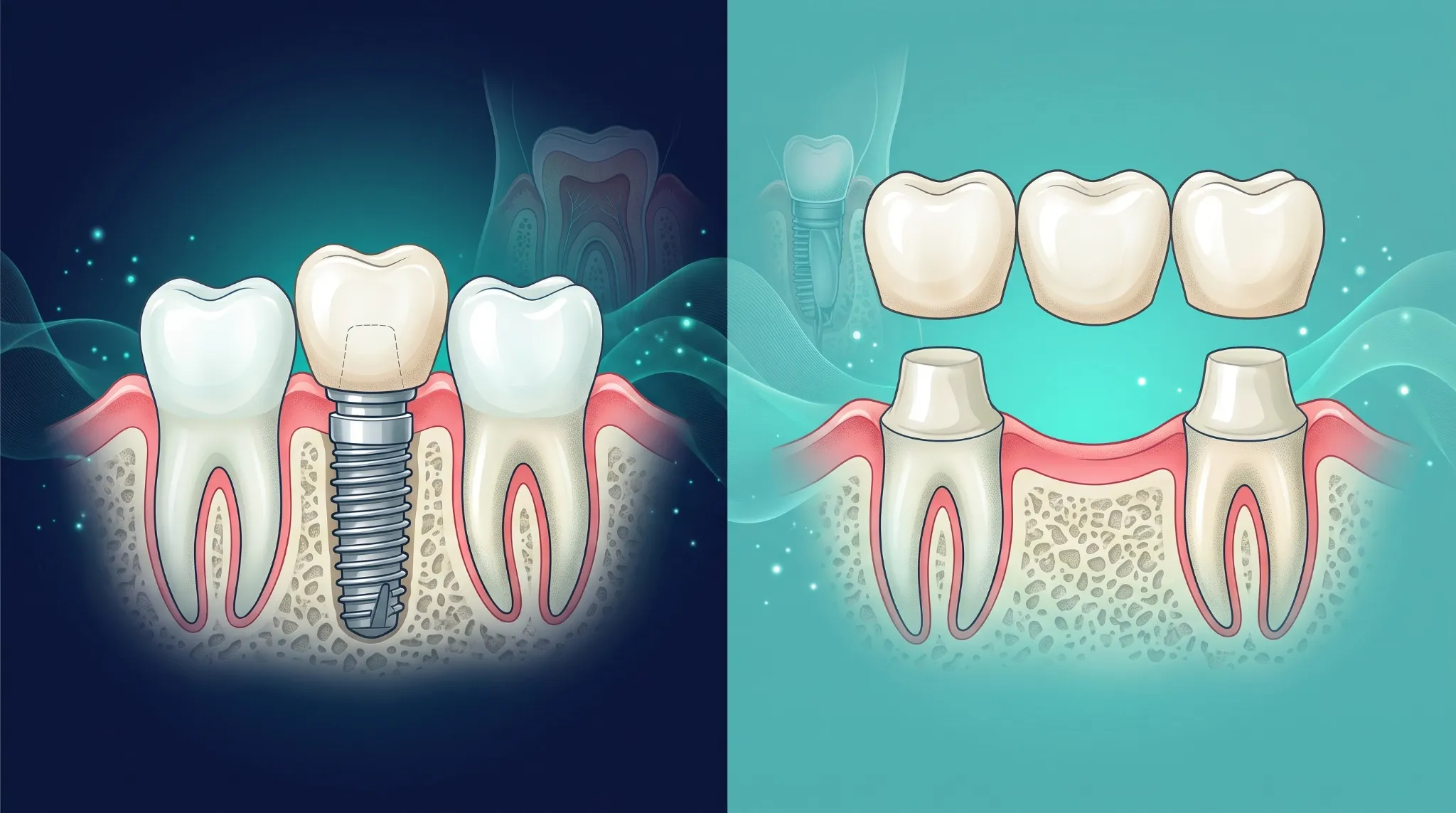
You have a gap where a tooth used to be, and you are checking whether new dental insurance will help pay to fill it. This is the rule that decides it, and plans word it differently, so read yours instead of relying on a summary, including this one.
What the clause does
Insurers do not want to pay to replace teeth that were lost before the coverage existed, so many plans exclude or limit that replacement. People call the rule a “missing-tooth clause.” It is not one standard sentence. Plans differ in which treatments it blocks (implant crowns, bridges, dentures), which teeth it counts as missing, and when the clock is measured.
What NCD Complete’s overview says
NCD’s product overview (form L1224045513) lists two relevant exclusions:
- The initial installation of a denture to replace one or more teeth that were missing before the person was insured, except for congenitally missing natural teeth.
- Implant-supported prosthetics to replace one or more teeth that were missing before the person was insured, except for congenitally missing natural teeth.
The overview does not mention fixed bridges in these exclusions, and it does not say whether the implant placement itself (as opposed to the implant-supported prosthetic) is treated differently. The certificate of coverage governs, so ask before you count on either.
How it plays out (what the wording says, not a guarantee)
| Your situation | Implant-supported crown or bridge | Initial denture | Fixed bridge | Replacing an existing crown, bridge or denture |
|---|---|---|---|---|
| Tooth lost before your coverage started | Excluded | Excluded | Not addressed in the overview; confirm | Not this exclusion; a frequency limit applies (1 in 10 calendar years) |
| Tooth still present when coverage starts, extracted later | On the face of the wording it is not a tooth “missing before”; confirm with the certificate | Same | Same | Same |
| Tooth congenitally missing | Exception to the exclusion | Exception | Not addressed | Not applicable |
A hypothetical illustration
Suppose an implant, abutment and crown has an allowed charge of $4,500. If the exclusion applies to your tooth, the plan pays $0 for the implant-supported prosthetic and you pay the full allowed charge. If the exclusion does not apply, Year 2 would look like this: the plan pays $2,250 and you pay $2,250, with the $3,000 implant maximum and the other limits in the implant coverage guide. Hypothetical charge, not a quote; premiums not included.
How to check any plan in ten minutes
- Find the exclusions and limitations section of the certificate, not the marketing summary.
- Search it for “missing,” “prior to the effective date,” “initial installation” and “replacement.”
- Note which treatments are named (denture, bridge, implant prosthetic) and which are not.
- Check how the plan defines the effective date, because “before coverage” is measured from it.
- Ask the plan or agent for a written answer about your specific tooth.
- Ask your dentist for a pre-treatment estimate (predetermination) from the plan before you start.
Be careful with advice about “getting around” the clause
Some pages promise tricks to bypass it. We do not, because whether a tooth counts as missing depends on the certificate and on facts about your tooth, and nobody here can promise an outcome. A better use of your time is to compare plans’ written wording, discuss alternatives and timing with your dentist, and ask about payment arrangements for work a plan will not pay.
Where to go next
For limits on implants see implant coverage; for denture and bridge rules see bridges and dentures; to compare the options, see implant vs. bridge. Record each fee on the estimate worksheet.
Benefit at a glance (NCD Complete)
| Service | Class | Plan pays | Limit |
|---|---|---|---|
| Implant services | Major (Type C) | 10% / 50% / 60% (Year 1 / 2 / 3+) | 1 per tooth position in 10 calendar years; $3,000 calendar-year implant maximum within the $10,000 plan maximum |
| Dentures | Major (Type C) | 10% / 50% / 60% (Year 1 / 2 / 3+) | 1 in 10 calendar years |
| Fixed bridges | Major (Type C) | 10% / 50% / 60% (Year 1 / 2 / 3+) | 1 in 10 calendar years |
| Inlays / onlays / crowns | Major (Type C) | 10% / 50% / 60% (Year 1 / 2 / 3+) | 1 replacement per tooth in 10 calendar years |
Source: NCD Complete product overview. Percentages apply after the $100 lifetime deductible on Basic and Major services, up to the $10,000 annual maximum. Uninsured cost ranges in this guide are not what the plan pays.
Common questions
Do all dental plans have a missing-tooth clause?
No single rule applies to every plan. Plans differ in what they exclude and how they word it, so read the exclusions section of your certificate. NCD Complete's overview excludes initial dentures and implant-supported prosthetics for teeth missing before coverage.
Does the missing-tooth clause apply to bridges under NCD Complete?
NCD's overview names initial dentures and implant-supported prosthetics. It does not mention fixed bridges, so confirm how the certificate treats a bridge for a tooth that is already missing.
What if my tooth is still in my mouth when my coverage starts?
A tooth that is still present is not one that was missing before coverage on the face of the wording, but the certificate controls. Confirm before you rely on benefits.
Does the clause affect replacing an old crown or denture?
Replacing an existing crown, bridge or denture is governed by frequency limits (1 in 10 calendar years for those services under NCD Complete), not by the exclusion for teeth missing before coverage.
See what NCD Complete would cost you
Your rate depends on your ZIP code and is shown on NCD’s official enrollment site, where you can read the plan terms before you enroll. To find out whether your dentist is in the MetLife PDP Plus network, ask the dentist’s office before treatment.
Marketed in: California, Florida, Michigan, Nevada, Ohio, South Carolina.