Dental Implant vs. Bridge: Cost, Insurance Rules and the Missing-Tooth Question
Last reviewed 2026-11-22 · By Carlos A. Torres Jr., licensed insurance producer · NCD Agent ID #1024251 · Editorial standards
Quick answer
A single implant (post, abutment and crown) is reported at about $3,100 to $6,000 and a 3-unit bridge at about $3,000 to $4,500. On NCD Complete both are Major benefits (10% / 50% / 60%), but implants stop at $3,000 per calendar year while a bridge counts only against the $10,000 maximum. Whether a bridge is covered for a tooth already missing is unconfirmed.
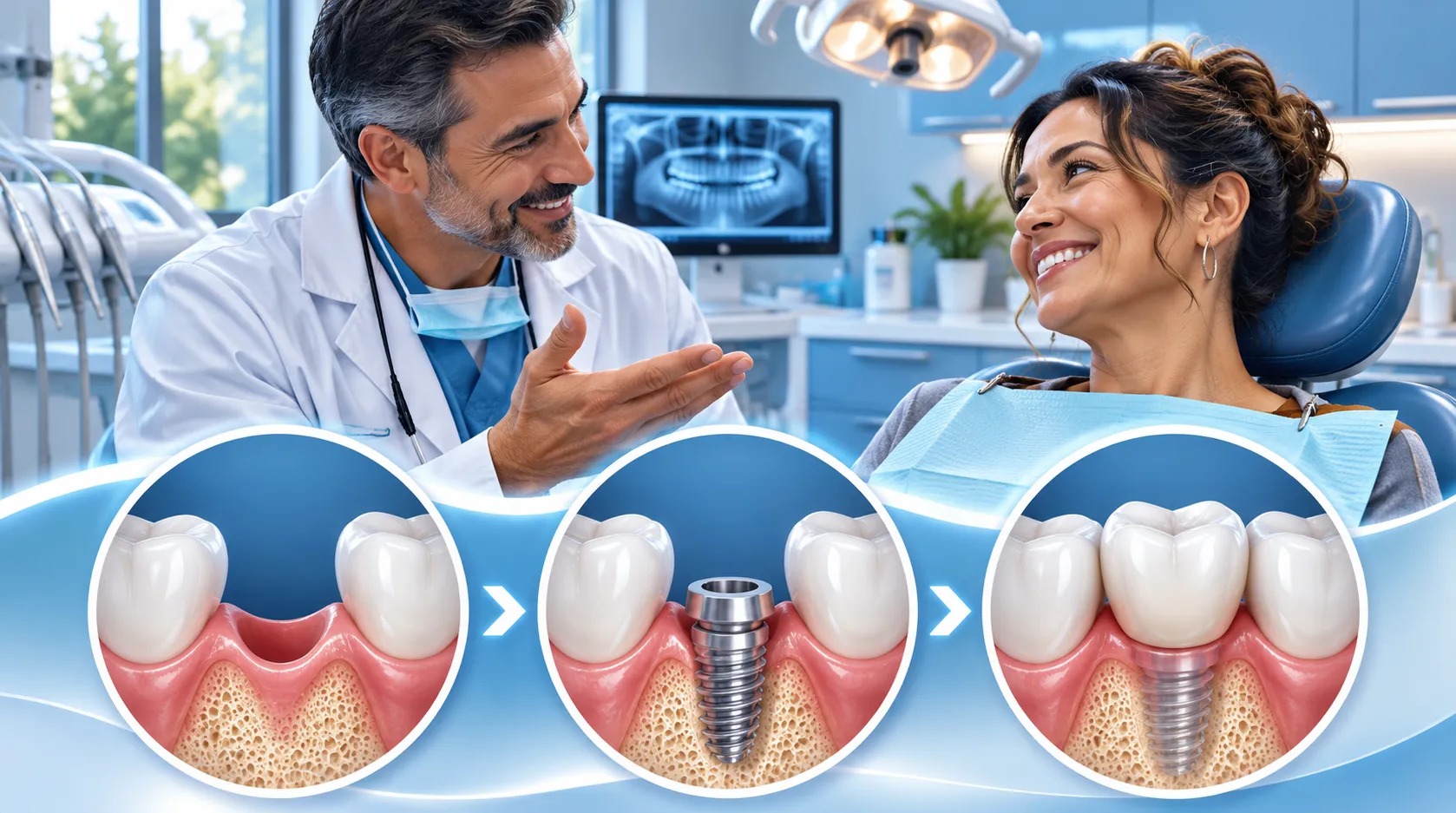
Implant or bridge? Your dentist will weigh the clinical differences: what the neighboring teeth need, bone, health and longevity. This guide covers the money and the coverage rules, which can tip a close decision.
Costs (reported ranges)
| Single implant (D6010, D6057, D6065) | 3-unit fixed bridge (D6240 and two D6740 crowns) | |
|---|---|---|
| Reported cash range | about $3,100 to $6,000 (one benchmark: about $4,507) | about $3,000 to $4,500 |
| What it involves | A post in the jaw, an abutment and a crown | Crowns on the two neighboring teeth with a replacement tooth between them |
Reported national ranges from Gemini’s research records (AAID benchmark, Towne Dental). Your dentist’s fees vary. Durability and clinical differences are for your dentist to explain. One published fee list we checked shows about $7,150 for an implant, abutment and crown and about $5,500 for a three-unit bridge, both above these ranges; see dental costs for sources and limits.
How NCD Complete treats each
| Implant | Fixed bridge | |
|---|---|---|
| Benefit class | Major (Type C) | Major (Type C) |
| Plan pays (Year 1 / 2 / 3+) | 10% / 50% / 60% | 10% / 50% / 60% |
| Annual limit | $3,000 per calendar year inside the $10,000 | Counts only against the $10,000 maximum |
| Frequency | 1 per tooth position in 10 calendar years | 1 in 10 calendar years |
| Missing before coverage? | Implant-supported prosthetics for those teeth are excluded | The overview does not say; confirm before relying on it |
Worked example (hypothetical)
Same tooth, Year 2, with an implant allowed at $4,500 and a bridge allowed at $3,800:
| Plan pays | You pay | |
|---|---|---|
| Implant | $2,250 | $2,250 |
| Bridge | $1,900 | $1,900 |
Where the bill is large enough, the implant’s $3,000 yearly limit can matter; a bridge draws only on the $10,000 maximum. Hypothetical charges; premiums not included.
The rule that may decide it
If the tooth was lost before your coverage started, the plan excludes implant-supported prosthetics for it. The overview does not say whether a bridge is also affected, so confirm it before you plan around bridge coverage.
See also implant coverage in detail, bridges and dentures and root canal vs. extraction.
Benefit at a glance (NCD Complete)
| Service | Class | Plan pays | Limit |
|---|---|---|---|
| Implant services | Major (Type C) | 10% / 50% / 60% (Year 1 / 2 / 3+) | 1 per tooth position in 10 calendar years; $3,000 calendar-year implant maximum within the $10,000 plan maximum |
| Fixed bridges | Major (Type C) | 10% / 50% / 60% (Year 1 / 2 / 3+) | 1 in 10 calendar years |
Source: NCD Complete product overview. Percentages apply after the $100 lifetime deductible on Basic and Major services, up to the $10,000 annual maximum. Uninsured cost ranges in this guide are not what the plan pays.
Common questions
Is an implant or a bridge covered more by NCD Complete?
Both are Major benefits paying 10% / 50% / 60%. Implants are limited to $3,000 per calendar year; a bridge counts only against the $10,000 annual maximum.
Can I get both an implant and a bridge covered in one year?
Each has its own frequency limit, and the $3,000 implant limit and the $10,000 annual maximum cap what the plan pays in a calendar year.
What if the tooth is already missing?
The plan excludes implant-supported prosthetics for teeth missing before coverage started. The overview does not say how that applies to bridges, so confirm before relying on coverage.
See what NCD Complete would cost you
Your rate depends on your ZIP code and is shown on NCD’s official enrollment site, where you can read the plan terms before you enroll. To find out whether your dentist is in the MetLife PDP Plus network, ask the dentist’s office before treatment.
Marketed in: California, Florida, Michigan, Nevada, Ohio, South Carolina.